Back to all essays
Insurance2 min read

Insurance CRM without the VA tax

How omnichannel AI qualification replaced expensive, inconsistent human follow-up, and kept CCPA in the loop.

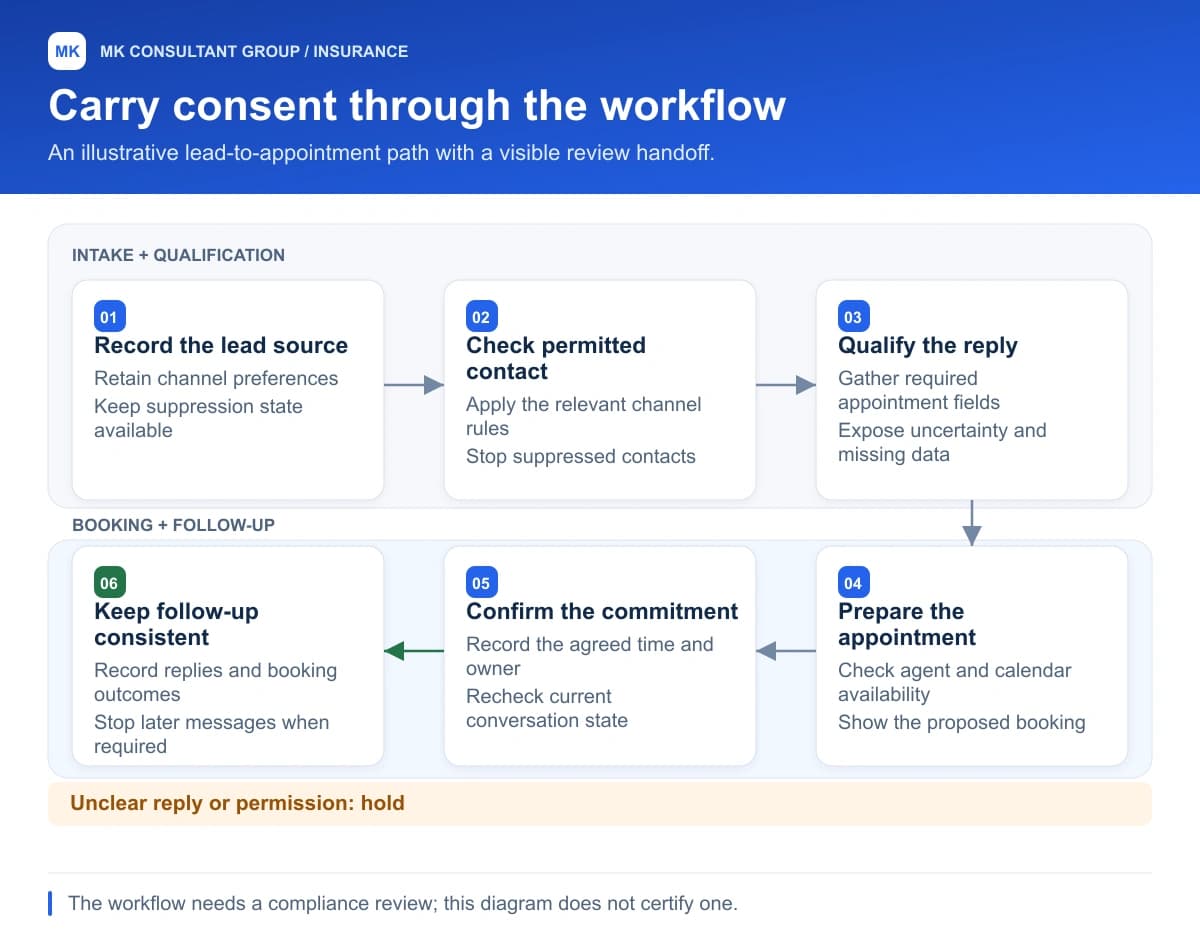
Carry consent through the workflow. Record the lead source; Check permitted contact; Qualify the reply; Prepare the appointment; Confirm the commitment; Keep follow-up consistent.
Open full-size workflow diagram
Read the workflow steps
  1. Record the lead source. Retain channel preferences. Keep suppression state available.
  2. Check permitted contact. Apply the relevant channel rules. Stop suppressed contacts.
  3. Qualify the reply. Gather required appointment fields. Expose uncertainty and missing data.
  4. Prepare the appointment. Check agent and calendar availability. Show the proposed booking.
  5. Confirm the commitment. Record the agreed time and owner. Recheck current conversation state.
  6. Keep follow-up consistent. Record replies and booking outcomes. Stop later messages when required.
  7. Unclear reply or permission: hold.
  8. The workflow needs a compliance review; this diagram does not certify one.
Cover graphic for Insurance CRM without the VA tax, Insurance

Human VA follow-up is expensive, inconsistent, and asleep when your best leads reply. In insurance growth orgs, that tax shows up as bloated payroll, uneven tone, and missed windows that never reappear on the calendar.

We built an AI-powered CRM stack that qualifies via SMS, email, and voice, then books appointments into agent calendars, with CCPA-compliant handling from ingest to outreach. Consent is not a footer. It is part of the state machine.

Hours back, show rates up

The win wasn't automation for automation's sake. It was reclaiming prospecting hours while raising show rates across a 3,500+ agent network. Agents spend time on conversations that are ready. The system does the chase work that used to burn out junior staff.

If your growth plan still assumes a growing VA army, you're budgeting for a problem technology already solved.

Omnichannel matters because leads do not live in one inbox. A reply on SMS at 9pm should not wait for a VA shift at 10am. Speed-to-lead is still a ranking factor in conversion. AI just makes it operationally honest.

Compliance is the reason this is hard. Skipping it is how you get sued. Building it into the CRM layer is how you scale without gambling the brand.
Implementation considerations

What to establish before automating lead qualification

Specify the handoff

Define qualification fields, assignment rules and what an agent needs before a conversation. A calendar booking alone does not establish lead quality.

Respect communication preferences

Carry consent, channel preferences and opt-out status through the workflow. Have the responsible business team approve contact rules and escalation requirements before enabling outreach.

Measure the same workflow

Compare time spent, qualified handoffs and attended appointments over an agreed period. Keep productivity, prospecting time and conversion separate; an improvement in one does not establish an improvement in the others.

Putting this into practice?